

Technical Specifications of Polure Fireplace Mantels Collection
Our professional architectural collection under the Fireplace Mantels Collection category is manufactured using high-density rigid polyurethane (PU) with a closed-cell structure. With a density of 150-220 kg/m³, these surrounds achieve a wood-like hardness while remaining lightweight, minimizing structural loads on walls. The material exhibits exceptional dimensional stability, ensuring no shrinkage, expansion, or warping over time. It has had its dimensional stability tested between -20 °C and +70 °C, meaning it maintains its form without deformation under normal operating conditions. With a water absorption rate below 1%, it is resistant to moisture, preventing decay, mold, and rot.
Design Variations and Modular Components
The Polure Fireplace Mantels Collection range includes diverse designs tailored for classical, neoclassical, and modern projects. Standard models feature precise CNC-milled details that outperform traditional plaster or gypsum in sharpness and impact resistance. Specific models in our catalog provide varying dimensions to suit different wall scales:
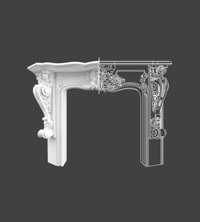
- P8401 (307x1446x1050 mm): A robust design with intricate ornamentation, perfect for spacious salons and historic restoration projects.
- P8402 (195x1205x1050 mm): A more compact, sleek profile suitable for minimalist or contemporary apartments.
- P8403 (307x1446x1050 mm): Offers balanced classical proportions with a detailed frieze.
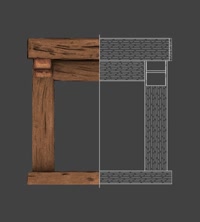
- P8404 Faux Wood Fireplace Mantel (250x1300x1300 mm): Features a realistic wood-grain texture, combining the physical durability of rigid PU with a rustic aesthetic.
- P8403W: Designed for wider wall coverage to create an authoritative architectural focal point.
Surface Treatment, Painting, and Maintenance Guidelines
Each product in the Fireplace Mantels Collection category is shipped with a factory-applied primer coat, which prepares the surface for final painting. However, paint manufacturers generally do not guarantee paint adhesion or finish quality unless their own proprietary primers are used beforehand. Consequently, applying an additional primer layer prior to final painting is optional and left to the discretion of the customer. Polure does not guarantee or accept liability for any paints applied to our products. Both water-based and synthetic paints are compatible. For outdoor applications, applying a UV-resistant paint is mandatory, as unpainted polyurethane can yellow when exposed to direct sunlight. The material has fire class B2 (DIN 4102-1).
Advantages Over Plaster, Wood, and EPS
When compared to traditional materials, Polure Fireplace Mantels Collection offer distinct performance benefits:
- Vs. Plaster (Gypsum): Considerably lighter and highly shatter-resistant, reducing transport costs and installation hazards.
- Vs. Natural Wood: Superior resistance to moisture, rot, and insect infestation, with reduced risk of splitting or cracking.
- Vs. EPS (Expanded Polystyrene): Far higher surface hardness, allowing for crisper ornamental details and excellent resistance to physical impacts.
- Acoustic Dampening: The closed-cell structure provides supplementary sound dampening.
Integration with Modern Heating Systems
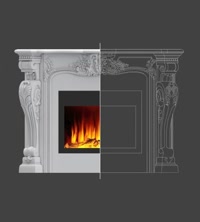
The architectural trend of integrating faux mantels with modern heating simulators has made the Fireplace Mantels Collection category highly sought after by European interior designers. Since our rigid polyurethane has had its dimensional stability tested between -20 °C and +70 °C, these mantels serve as ideal decorative housings for electric LED fireplace inserts, holographic flame displays, and low-temperature bioethanol burners. However, because the material is decorative and its dimensional stability has been tested between -20 °C and +70 °C, direct exposure to open wood-burning flames or high-heat gas inserts is strictly prohibited. When integrating electric or bioethanol units, adequate ventilation must be provided behind the mantel to ensure heat dissipation does not exceed the material's threshold.
Architectural Coordination with Other Polure Elements
A cohesive interior design often requires matching the decorative mantel with other architectural profiles. The Fireplace Mantels Collection collection is designed to harmonize perfectly with Polure's wider range of interior and exterior elements. Designers frequently pair these mantels with matching coving cornices, skirting boards, ceiling medallions, and decorative wall panels to create a unified classical or neoclassical aesthetic. For outdoor or semi-outdoor transitions, such as covered patios or veranda fireplaces, the same design language can be matched with our exterior window casings, columns, corbels, belt courses, and keystones, ensuring a seamless architectural flow throughout the property.
Usage Areas
The decorative mantels within the Polure Fireplace Mantels Collection category are utilized across a wide variety of commercial and residential settings. In residential interiors, they serve as a central decorative focal point in main living areas, salons, and master bedrooms, often housing electric flame simulators or acting as a backing frame for media centers. In commercial spaces, they are frequently specified for hotel lobbies, executive offices, high-end restaurants, and boutique retail showrooms to establish a structured, classical atmosphere. Although primarily designed for interior use, these rigid polyurethane mantels can also be applied in semi-outdoor environments, such as covered verandas, patios, or protected balcony lounges. Since the material features a water absorption rate under 1%, it remains highly resistant to humidity, moisture, or coastal air. For any outdoor or semi-outdoor installation, coating the entire surface with a high-quality UV-resistant paint is mandatory to prevent discoloration from solar radiation. Additionally, all joint lines and screw fixation points must be sealed with a durable outdoor-grade putty to maintain weatherproofing. These surrounds are also highly functional for staging in photo studios, theater sets, and temporary exhibition booths due to their lightweight nature and ease of transport.
Installation
Installing products from the Polure Fireplace Mantels Collection category requires a systematic approach to ensure long-term stability and a clean finish. 1. Surface Preparation: Ensure the mounting wall surface is completely clean, dry, and structurally sound. Mark the precise guidelines for the legs and mantel shelf. 2. Miter Cutting: For any corner joints or custom alignments, perform precise 45-degree miter cuts using a fine-toothed saw. 3. Adhesive Application: Apply a high-quality polyurethane (PU) assembly adhesive evenly to all wall-contact surfaces and joint connections. Do not use silicone adhesives, as they do not provide the necessary structural bond for rigid PU. 4. Mechanical Fixing: Mechanical fastening using screws is mandatory to secure the heavy-duty legs and top mantel shelf to the wall while the adhesive cures. 5. Joint Sealing & Sanding: Fill all joint gaps, seams, and screw head recesses using a suitable joint putty (use outdoor putty for any semi-outdoor installations). Once dried, sand the surfaces smooth using 180-220 grit sandpaper. 6. Painting: The components arrive with a factory-applied primer. However, paint manufacturers do not guarantee paint performance unless their own proprietary primers are used first; therefore, applying an extra primer coat is optional and at the customer's discretion. Finish with two coats of high-quality water-based or synthetic paint. (For outdoor environments, UV-resistant paint is mandatory).
Care Information
Maintaining the pristine condition of your Polure Fireplace Mantels Collection mantel is straightforward due to the durable characteristics of high-density rigid polyurethane. For routine cleaning, simply wipe the surface with a soft, damp cloth. Avoid using harsh chemical solvents, abrasive scrubbing pads, or strong acids, which can degrade the paint finish. Because the closed-cell material has a water absorption rate under 1%, it will not swell, crack, or peel when exposed to humidity, unlike traditional MDF or plaster. In the event of minor physical damage, such as scratches or small impact dents from daily use, the surface can be easily repaired. Simply apply a small amount of acrylic putty to the affected area, allow it to dry completely, sand it smooth with 180-220 grit sandpaper, and apply a touch-up coat of the matching paint. This straightforward repairability supports long-term performance under normal indoor conditions.


