Project Details
| Application Area | Indoor |
|---|---|
| Style | Modern |
| Space Type | General |
| Products Used | 3 items |
| Material | Rigid polyurethane (PU) |
| Density | 150-220 kg/m³ (production target ~160 kg/m³) |
| Service Temperature | -100 °C / +80 °C |
| Fire Class | B2 (flame retardant) |
Polyurethane indirect lighting profiles are high-density architectural elements engineered to seamlessly integrate LED channels and luminaire fixtures into ceilings and walls. Manufactured from rigid molded polyurethane with a high density of 150 to 150-220 kg/m³ (production target ~160 kg/m³), these lighting profiles provide an ideal framework for custom lighting designs in commercial spaces such as luxury showrooms, hotels, and high-end retail stores. The material exhibits a closed-cell structure with water absorption below 1%, making it dimensionally stable and impervious to moisture fluctuations. These architectural mouldings allow designers to embed spot fixtures and indirect light strips directly into the ceiling plane without heavy structural modifications.
In modern interior architecture, lighting profiles P81376, PA501, and PA502 serve as technical conduits that bridge decorative ceiling surfaces with functional illumination. Profile model P81376 creates continuous linear light bays along perimeter borders, while luminaire profiles PA501 and PA502 allow for smooth transitions around protruding recessed spotlight canisters. Engineered with a B2 fire safety rating and an operational temperature range from -100 °C / +80 °C, polyurethane lighting profiles withstand thermal exposure from modern LED modules without warping or discoloring. Installation is executed using specialized polyurethane adhesives reinforced with mechanical fasteners for broad profiles, eliminating the need for heavy plasterwork.
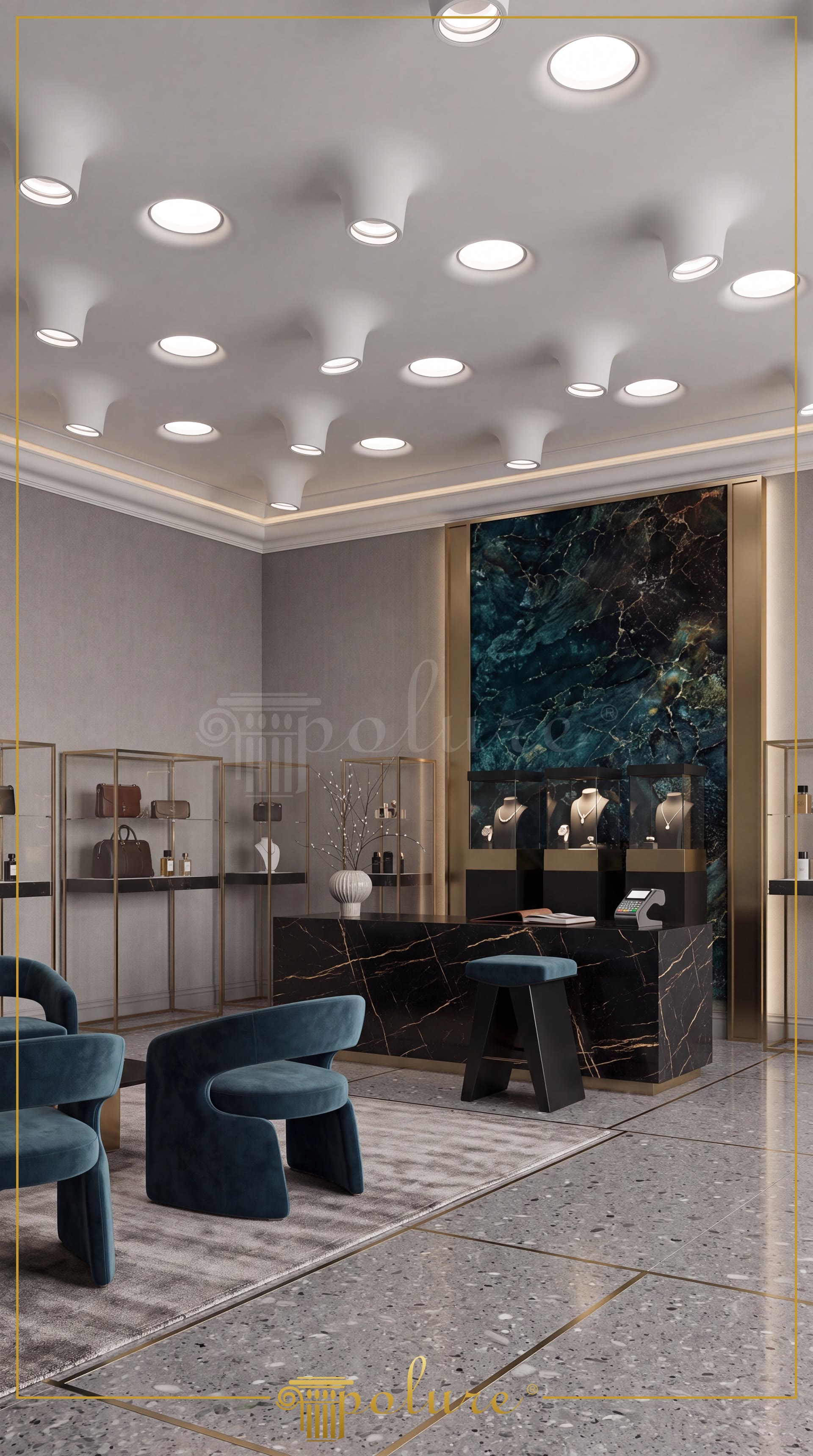
The boutique showroom setup illustrates how ceiling lighting architecture influences spatial depth and product presentation. Recessed lighting canisters set within polyurethane profile housings deliver focused downlighting over display counters and jewelry showcases, while indirect linear lighting washes adjacent walls. This controlled distribution highlights dark marble textures, metallic shelving, and velvet seating without creating harsh glare on glass cabinets. The factory-primed smooth surface of polyurethane profiles accepts water-based interior paints, allowing the ceiling plane to match exact architectural color schemes across the room.
Polyurethane light profiles offer significant practical benefits compared to traditional gypsum or wood light coves due to their lightweight properties and resistance to cracking. Weighing significantly less than concrete or plaster mouldings, high-density polyurethane profiles reduce dead load on suspended ceiling grids and accelerate installation timelines. The non-porous surface prevents dust accumulation and mold growth, ensuring minimal maintenance in high-traffic commercial environments. Integrating polyurethane recessed lighting profiles provides architects and lighting designers with a versatile, durable solution for sophisticated ceiling lighting schemes.
Integrated ceiling lighting schemes in commercial environments require structural elements that balance light diffusion and architectural symmetry. The architectural composition combines recessed spotlight canisters set within polyurethane lighting profiles to deliver both targeted downlighting and ambient perimeter illumination. Dark green marble wall panels and dark counter surfaces are strategically highlighted by the downward lighting cone, accentuating material textures and visual depth. Polyurethane profiles PA501, PA502, and P81376 frame the ceiling plane cleanly, concealing structural joins while providing precise housing for LED fixtures. The lightweight composition of molded polyurethane simplifies overhead installation, allowing complex multi-fixture ceiling layouts without adding excessive weight to suspended grid systems. The resulting light environment enhances retail product presentation while maintaining a clean, cohesive interior aesthetic.


