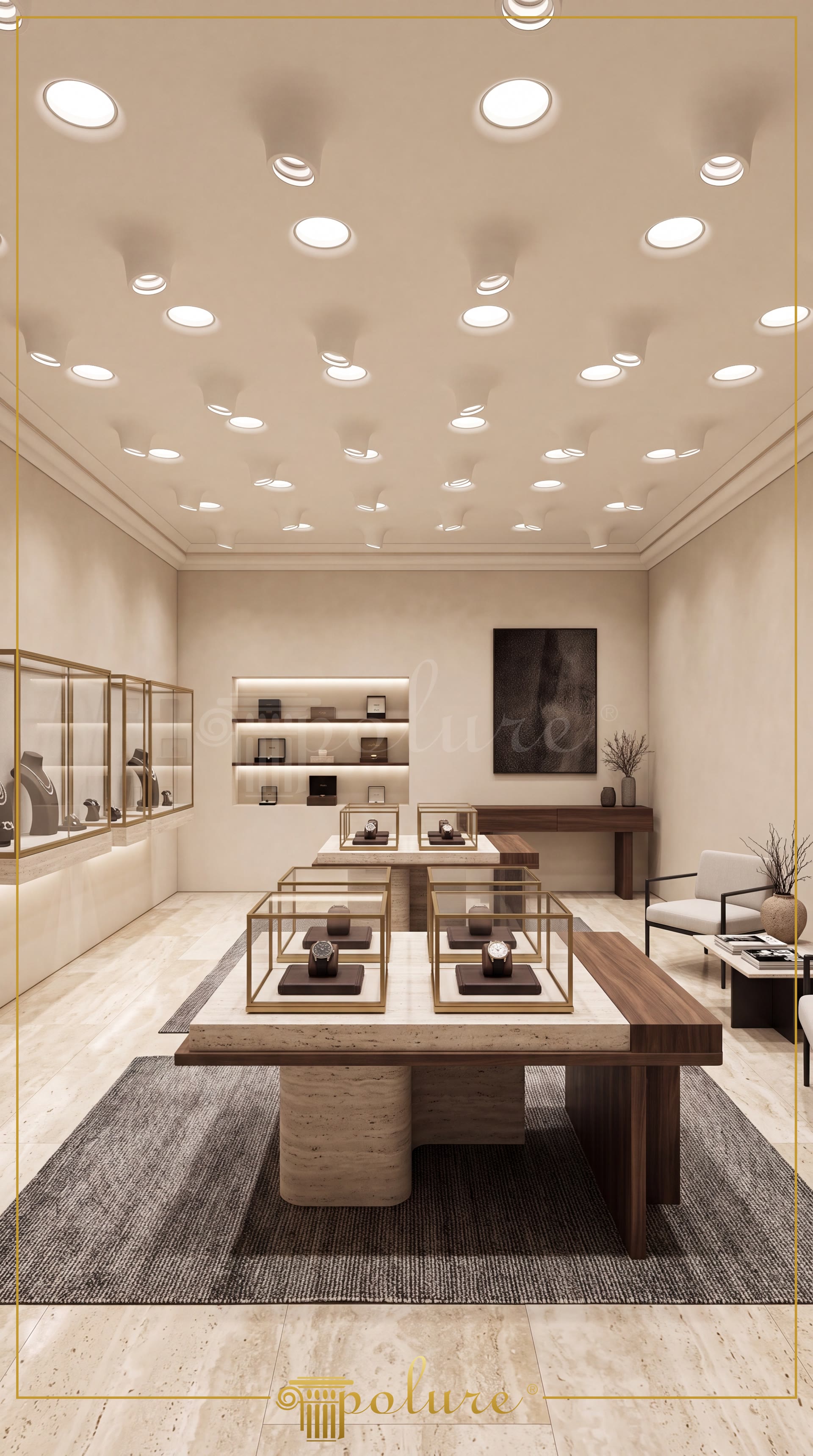
Polyurethane recessed light trims and ceiling coves are high-density architectural elements designed to house downlights, LED strips, and spot fixtures seamlessly within modern ceiling planes. In luxury commercial environments like the boutique showcase pictured, these architectural components allow direct and indirect lighting fixtures to be integrated directly into the overhead structure without visible hardware or raw edges. By utilizing high-grade polyurethane models such as P81376 alongside PA501 and PA502 mounting trims, interior architects achieve clean lighting patterns that highlight display zones without causing glare or visual distraction.
Architectural polyurethane profiles offer significant technical benefits over traditional plaster or gypsum board light troughs. Produced with a high structural density of 150-220 kg/m³ (production target ~160 kg/m³), these components exhibit high mechanical stability, resistance to impact, and zero water absorption below 1%. Their operating temperature range from -100 °C / +80 °C ensures that heat emitted from low-voltage LED transformers or recessed spotlights will not warp, crack, or discolor the surrounding ceiling moulding over years of continuous operation.
Installing polyurethane spot housings and perimeter coves accelerates construction timelines while delivering seamless visual lines. Lightweight P81376 coves and PA501 or PA502 spot trim rings can be bonded directly to plasterboard ceilings using high-strength polyurethane adhesive, followed by standard acrylic filler at joint connections. Sanded smooth with 180-grit abrasive paper and finished with two coats of solvent-free emulsion or acrylic ceiling paint, the fittings blend invisibly into the ceiling plane, producing a smooth surface that appears to be sculpted directly into the architecture.
In commercial jewelry and watch showrooms, precise lighting placement is crucial for enhancing luxury goods on display. The grid-based array of circular recessed ceiling trims combined with perimeter indirect lighting creates balanced ambient illumination across travertine counters and glass display cabinets. The rigid polyurethane material ensures crisp geometric edges and uniform light diffusion, proving to be an essential material choice for contemporary retail interiors, hotel lobbies, and high-end residential living rooms.
Design Details
The spatial arrangement in this high-end retail interior highlights how structured ceiling light profiles define display zones without overwhelming the architecture. Utilizing polyurethane profiles like P81376, PA501, and PA502 enables flush-mounted spot fittings and hidden perimeter light channels to coexist in perfect harmony. The high density of 150-220 kg/m³ (production target ~160 kg/m³) ensures long-term dimensional stability, preventing micro-cracking around high-heat light fixtures. Warm ambient glow bounced off neutral wall surfaces balances the concentrated spotlights aimed at watch presentation cases. This integrated lighting strategy creates a calm, sophisticated environment where architectural detail quietly enhances product presentation.