 ENGLISH
 ITALIAN
 GERMAN
 GREEK
GREEK FRENCH
 SPANISH
 PORTUGUESE
 POLISH
 DUTCH
DUTCH ALBANIAN
 SERBIAN

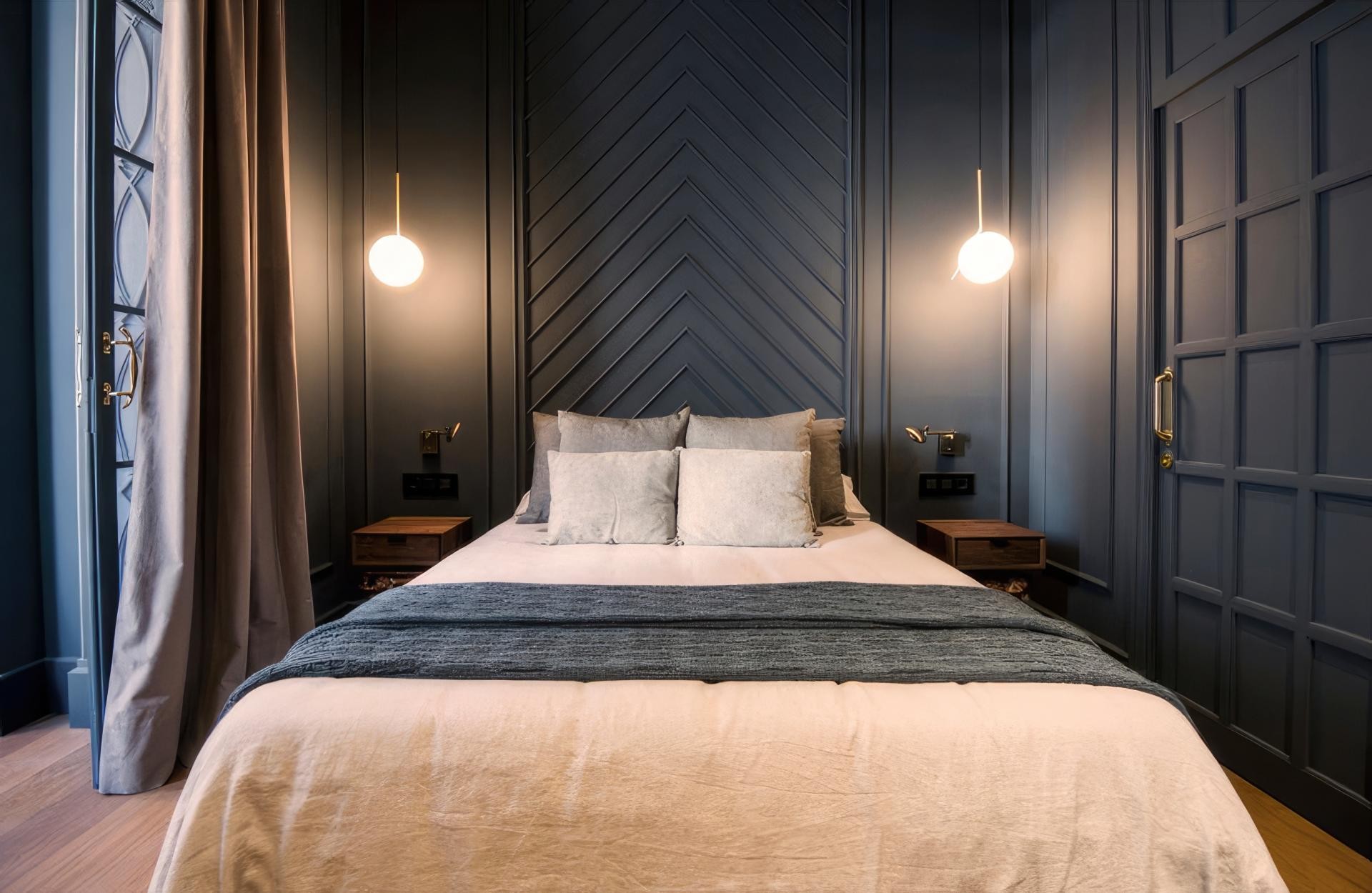
Modern Classic Bedroom with Navy Panels and Romantic White Accents
Modern Classic Style with Navy PanelsThe bedroom design demonstrates how classical forms can merge with modern aesthetics. The navy wall treatments are structured with rectangular paneling, while the central headboard wall showcases a chevron motif that enriches the verticality and creates a patterned centerpiece. This detailed woodwork recalls the historic use of geometric motifs in aristocratic interiors, yet it is simplified for a contemporary appeal.Contrasting the depth of navy, the bed is dressed in soft white bedding, with layers of cushions and a textured throw in shades of gray and blue. This balance highlights a romantic sensibility within a bold architectural frame. The golden rods supporting the spherical lights add a touch of modern glamour against the matte blue surfaces.Materials and Textural HarmonyThe use of wood is subtle but essential; nightstands in warm tones provide relief against the cooler palette. Curtains with a silky beige sheen soften the vertical lines and echo the idea of timeless luxury. Light distribution, generated by pendant orbs, enhances the sense of geometry and shadows within the chevron wall, making the space dynamic yet serene.From a design history perspective, chevron themes have roots in classical European parquet flooring patterns, now reinterpreted here in wall paneling to reinforce architectural rhythm. The mixture of modern lighting and classic detailing captures the essence of transitional interiors, bridging eras with finesse.Navy paneling with geometric motifs.Romantic white bedding and layered textiles.Golden pendants casting warm light accents.Structured symmetry paired with soft materials. This bedroom integrates modern and classic design elements into one elegant space. The deep navy wall panels give architectural strength to the room. A chevron panel behind the bed adds dimensional texture. The bed is dressed in soft white linens for a gentle contrast. Cushions in varying tones enhance layered comfort. Pendant lighting with golden rods provides warm highlights. Wooden nightstands add natural balance. Flowing curtains bring softness to vertical lines. The design uses geometric rhythm to create harmony. Warm and cool tones achieve balanced sophistication. The chevron motif links modern style with tradition. Classic panel geometry enhances the contemporary setting. Layers of fabric establish tactile richness. Lighting softens the depth of navy walls. This blend of modern and classic details defines a romantic interior.

Polyurethane Modern Classic Exterior Facade Design with Elegant Ornamentation
Modern Classic Facade with Polyurethane DetailingThis architectural design embraces the modern classic tradition, employing polyurethane to achieve precision and elegance in intricate motifs. The facade is dominated by arched window frames accented with ornamental keystones, paired with vertical pilasters that visually organize the facade into rhythmic sections. The balance between order and richness reflects centuries of architectural refinement, echoing Renaissance and Neoclassical traditions.A central vertical glass bay framed with pilasters and crowned by a circular motif introduces a contemporary accent. This element not only channels natural light but also enhances the sense of symmetry and proportion. The use of polyurethane makes possible the fine detailing of cornices, crowns, and decorative frames, demonstrating durability while delivering a luxurious aesthetic.Ornamentation and Geometric CompositionThe facade’s composition relies on an interplay between symmetry and ornament. Each window is treated as a framed unit, enriched with molded arches. Above, the cornice line provides a strong horizontal termination, while decorative lighting fixtures emphasize the rhythm of the design. The geometric elements are arranged to form a precise hierarchy, blending classic order with a modern sensibility.Historically, architectural details such as arches and pilasters were employed to express authority and harmony, particularly in Renaissance palazzi. This facade bridges that heritage with contemporary styling, using ornament as both structural language and decorative sophistication.Arched motifs with finely molded keystonesVertical pilasters accompanying window groupingsSymmetrical arrangement emphasizing balanceDurable polyurethane construction ensuring longevityThe design results in a facade that is simultaneously modern, classical, and timeless, projecting distinction while integrating durable materials for long-term architectural presence. This facade design presents a modern classic interpretation achieved with polyurethane detailing. The composition emphasizes symmetry through arched windows and decorative pilasters. A tall glass vertical section crowned by a circular motif adds contemporary clarity. Intricate keystones above each arch enhance the sense of crafted ornament. Decorative lighting fixtures emphasize specific architectural rhythms. Polyurethane allows precise molding of complex classical motifs. The gray-toned palette adds subtle sophistication and calmness. The cornice line creates a strong horizontal termination. Historical references echo Renaissance and Neoclassical facades. The balance of proportion ensures visual harmony. Ornamentation functions both structurally and aesthetically. Each geometric layer builds a monumental impression. Material durability ensures long-term preservation of detailing. The facade blends traditional design with modern execution. The result conveys both timeless elegance and architectural authority.

Polyurethane Exterior Molding Design for Classical Facade Decoration
Classical Facade Enriched with Polyurethane MoldingThe building presents an elegant balance of tradition and modernity through the use of polyurethane facade moldings. Its geometry is enhanced by vertical pilasters and horizontal cornices that frame each level, producing a rhythm reminiscent of neoclassical architecture. Above the windows, triangular and curved pediments with ornamental motifs accentuate the sense of harmony. These polyurethane elements replicate the stone-like texture and convey durability, while being lightweight and practical.The corner details showcase column-like articulations that elevate the overall composition. The entrance gate integrates two freestanding pillars topped with Corinthian-inspired capitals, echoing the historical language of ancient Greek architecture. Such references to the Doric and Ionic traditions can be traced back to the early use of architectural ornamentation in civic and domestic buildings.Geometric Ornamentation and Aesthetic HarmonyThe facade features repeating linear grooves that stretch across the exterior. Each window is surrounded by multi-layered decorative frames, giving depth and emphasizing balance. The rooftop is given a gabled finish with textured dark tiles, contrasted by flower troughs that soften the architecture. The side fence complements the main building with a series of classical panels and ornamental finials.This project illustrates how classical design can be rendered with modern materials. Polyurethane ensures that the motifs maintain precision in detail and resistance against weather conditions. The combination of strong geometric repetition, natural accents through greenery, and ornate surface treatment makes the building not only functional but also a statement of aesthetic prestige.Triangular and curved pediments enhance the historic atmosphere.Column-like elements emphasize verticality and grandeur.Polyurethane ensures lighter yet durable classical detailing.Landscape integration balances architecture with nature. This project demonstrates how polyurethane can transform a building facade into a sophisticated work of architecture. The use of polyurethane moldings allows intricate details while maintaining durability against weather. Each level of the facade features rhythmic frames that give depth. The triangular and curved pediments highlight a sense of classical grandeur. Corner details shaped like columns lend vertical emphasis. A gabled roof with dark tiles contrasts with pale walls. Flower troughs soften the rigid geometry with natural vibrancy. The fence continues the visual language with paneled geometry. Finial ornaments crown the fence for elegance. Window surrounds are articulated in layered proportions. Linear grooves create a unifying rhythm. The entrance gate pillars recall ancient classical design. References to Doric and Ionic traditions enrich authenticity. The blend of geometric order and ornamentation highlights balance. This design shows how modern decorative frames achieve timeless appeal.
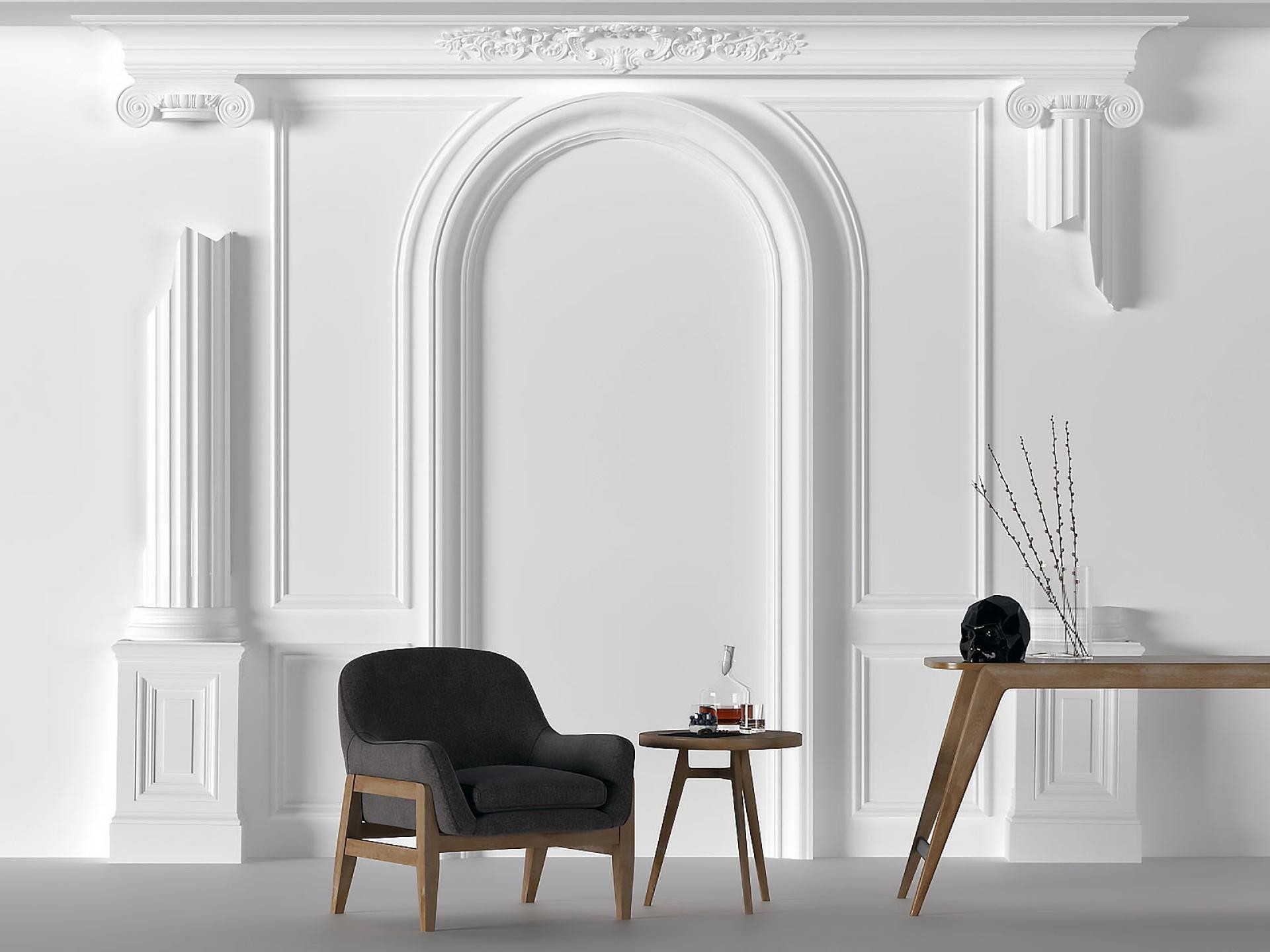
Polyurethane Broken Column Models for Modern and Classical Interior Elegance
Polyurethane Broken Columns in Modern InteriorsPolyurethane broken column models combine refined geometry with timeless ornamental detail, offering a versatile decorative solution for interiors balancing classical and contemporary influences. Their smooth white finish enhances natural light reflection, while their clean profiles integrate seamlessly into modern living spaces.The surface showcases carefully sculpted reliefs featuring scroll-like volutes and curved lines that reference Ionic and Corinthian architectural traditions. The broken structure, where part of the shaft remains visible while other parts suggest continuity, adds a subtle narrative quality reminiscent of archaeological fragments. Historically, broken or half-columns were incorporated into Renaissance and Baroque compositions to emphasize rhythm and drama.In this composition, the arch framed by polyurethane columns is enriched with decorative foliage motifs and deep grooves. Together, these create a sophisticated spatial rhythm framed against minimalist furniture, like a modern dark-toned chair and sleek wooden tables. This juxtaposition highlights the balance of modern function and classical aesthetics.Lightweight and easy to installDetailed carved patterns without heavy stone massFlexible use in residential and commercial projectsSeamless blend of ornamental artistry with functional designBy combining the historical heritage of classical columns with the innovative properties of polyurethane, these broken column models offer a versatile solution for spaces seeking depth, elegance, and artistic texture. Polyurethane broken column models create interiors that merge modern function with classical heritage. Their smooth surfaces highlight precise geometry that accentuates wall rhythm. The decorative foliage and voluted motifs recall Ionic and Corinthian traditions. Broken shafts suggest timeless fragments of history. The white polyurethane material reflects light with subtle elegance. These ornamental profiles offer a lightweight yet refined presence. They provide dramatic framing for arches and openings. The blend of minimal furniture with ornamental reliefs balances contrast. Details like grooves and sculpted scrolls enrich the overall ornamental narrative. Such models reference archaeological fragments while adapting to modern walls. Designers use them to add depth without heaviness. Each composition evokes elegance in both classical and modern settings. Their adaptability makes them suitable for homes and galleries. By combining tradition with innovation, they embody versatile artistry. Ultimately, polyurethane columns link historical aesthetics with contemporary living.
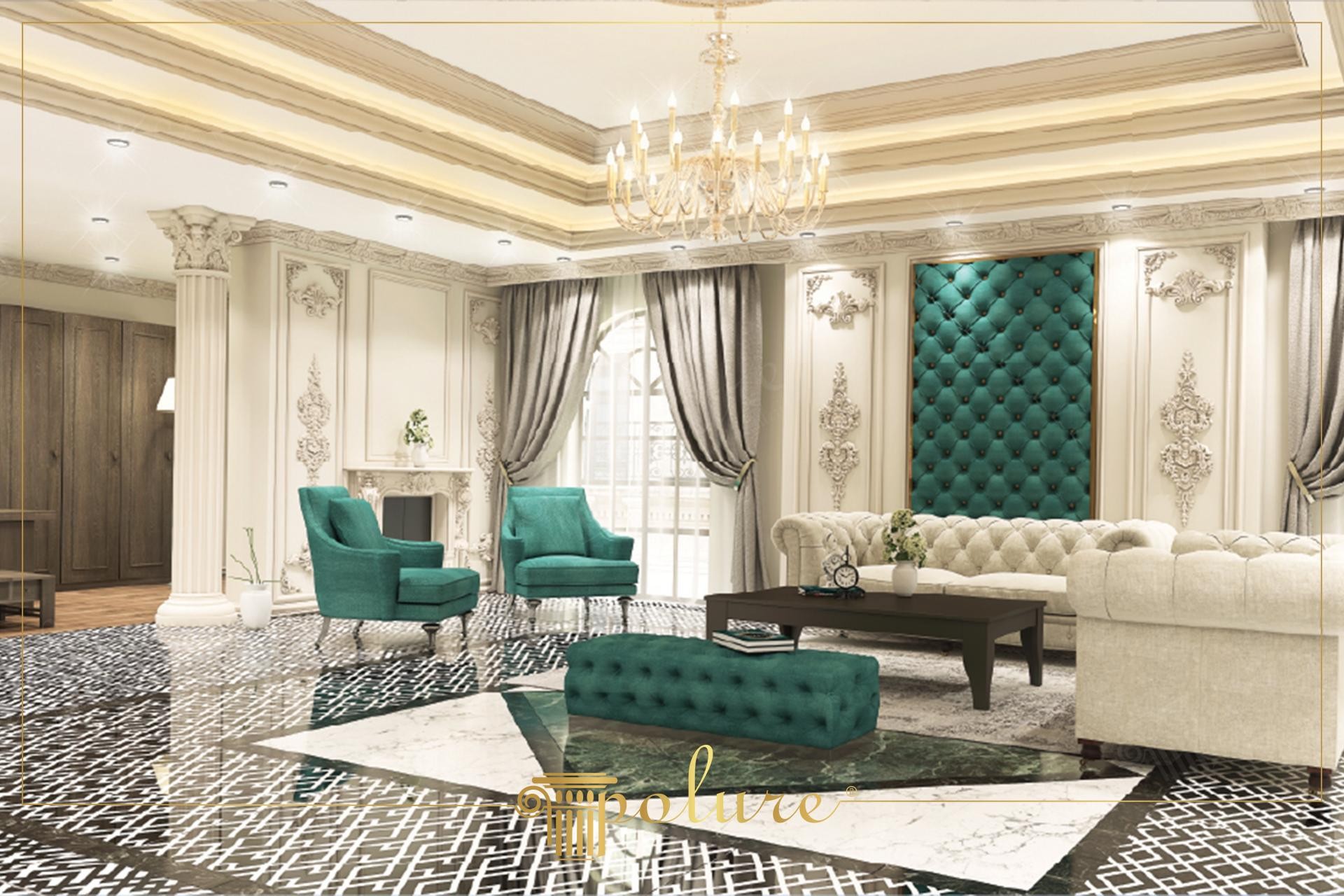
Timeless Elegance with Polyurethane Classic Interior Decoration
Classical Harmony in Interior DesignThe featured living area demonstrates how polyurethane elements can redefine classical spaces with delicacy and precision. Elaborately carved wall panels integrate seamlessly with Corinthian-style columns, establishing a strong sense of tradition. The emerald-green tufted headboard-like wall accent serves as a focal point, adding depth and vibrancy against the neutral backdrop of cream and ivory tones.Materials and DetailingThe flooring stands out with a striking contrast between marble-like textures and bold geometric patterns, reflecting light and adding dynamism to the room. Polyurethane moldings frame the walls and ceilings with floral and acanthus motifs that nod to European palatial styles. Combined with shimmering drapery and metallic highlights in the chandelier, every element underscores enduring sophistication.Furnishing and EleganceComfort finds its place through the use of tufted sofas and accent chairs in a deep green velvet, balanced by soft curtains in silver tones. The ottoman, also finished in richly tufted upholstery, mirrors the wall feature in both material and color, subtly reinforcing continuity throughout the design. A dark wooden coffee table anchors the seating arrangement, lending an earthy counterbalance to the opulent surroundings.Historical InspirationClassical interiors often draw on Greco-Roman architectural traditions, where Corinthian columns and ornamental reliefs held symbolic weight. This heritage is subtly revived with decorative motifs that line the walls and ceiling, offering not just historical resonance but also a tactile richness that connects past craftsmanship with present innovation. This classic living room illustrates how polyurethane can be shaped into refined motifs that define elegance. Ornamental wall panels echo traditional craftsmanship. Columns inspired by Corinthian architecture provide vertical grandeur. The shimmering chandelier spreads light across detailed ceiling moldings. Soft cream tones harmonize with dark flooring elements. Luxurious emerald upholstery offers vivid contrast. The floor integrates bold geometric patterns with marble effects. Curtains in silver-gray add graceful softness. Carved embellishments reinforce historical references. Comfort is emphasized through tufted seating. The ottoman mirrors the accent wall for continuity. A dark table stabilizes visual movement. Wall motifs enhance texture and symmetry. The design unites tradition with innovation. This space embodies timeless elegance and functional luxury.

Polyurethane Villa Facade Decoration with Rustic and Classical Details
Elegant Decorative Facade with Polyurethane AccentsThe villa demonstrates a remarkable interplay of natural textures and precise detailing enhanced by polyurethane elements. Wooden textures dominate the balcony, displaying lattice motifs that add rhythmic geometry to the arched structure. Below, the stone base anchors the visual balance with timeless rustic strength, while upper levels embrace elegant symmetry.The facade integrates rustic wooden cladding with classical architectural framing. Bay windows painted in deep green and soft beige highlight the volumetric richness and provide depth through their three-dimensional projections. These features are framed with decorative borders, showcasing subtle relief and shadow effects.The balcony stands out with strong corbels and arched latticework, offering both beauty and architectural support. Such motifs recall early traditions from Mediterranean and Ottoman architecture, where geometric panels and arch details formed cultural expressions of refinement.The integration of villa entrance design emphasizes clean vertical lines, ornamental articulation, and harmonious material contrast. From the cobblestone-paved entrance to the layered upper facade, every detail is crafted to create a welcoming yet dignified impression.Rich ornamental panels surrounding windowsContrasting stone, wood, and masonry texturesCarefully proportioned polyurethane cornices and corbelsOverall, this facade exemplifies both strength and elegance, blending aesthetic sophistication with durable functionality. This villa facade design unites polyurethane decoration with rustic and classical inspiration. The stone base conveys durability and anchors the structure firmly. Wooden surfaces on the upper floors present warm tones and natural elegance. Intricate lattice patterns enrich the balcony, adding an artisanal charm. The deep green bay window creates a bold contrast against lighter walls. Beige panels next to it soften the overall composition with subtle harmony. Decorative corbels accentuate the balcony’s projection gracefully. Relief borders on the windows emphasize fine craftsmanship. The villa combines modern design with timeless cultural references. The symmetrical arrangement enhances balance and prestige. Natural textures bring warmth into the exterior. Strong geometric motifs highlight the architectural rhythm. The entrance is inviting yet dignified. The overall harmony blends tradition with innovation. This villa facade offers both aesthetic appeal and lasting performance.
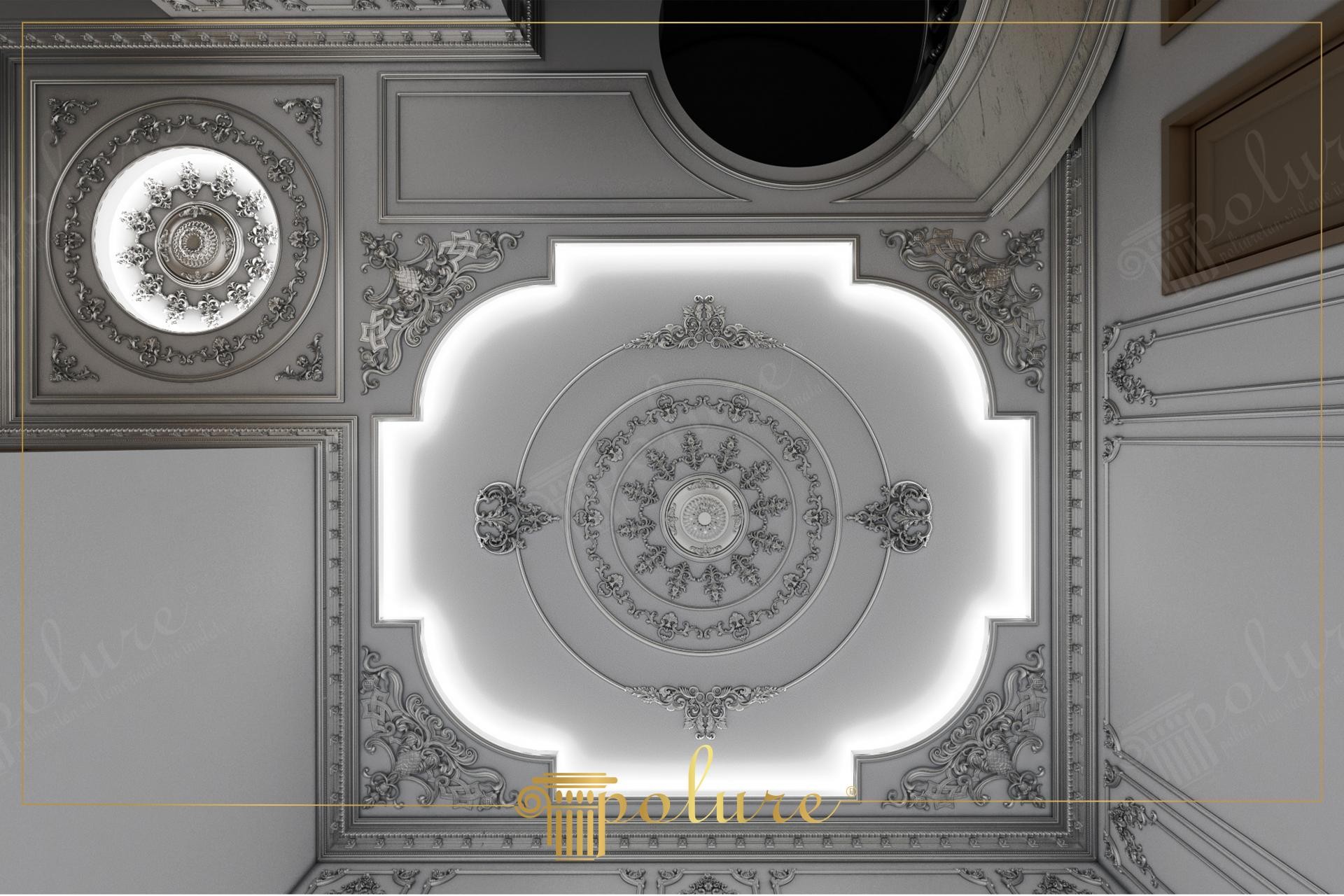
Elegant Polyurethane Classical Ceiling Design with Ornamental Motifs
Classical Polyurethane Ceiling DesignThis ceiling composition demonstrates the elegance of polyurethane as a material for refined and durable decorative solutions. Its intricate ornamental motifs echo traditional European aesthetics, blending floral swirls with geometric precision. The central medallion radiates with rosette-inspired layers, recalling historical interior references seen in Renaissance and Baroque palaces, while remaining perfectly suited to modern applications.A rich series of textured reliefs with scrolls, acanthus leaves, and stylized flowers are arranged in symmetrical alignment. The luminous outline framing the main medallion emphasizes spatial depth, producing an interplay between shadow and light that enhances its decorative power.The frame panels along the periphery include intricate corner embellishments that balance the composition. This combination not only provides a timeless aesthetic, but also ensures design continuity across the entire ceiling space. The design enriches interiors that strive for classical refinement and architectural harmony.Historical references to ceiling ornamentation can be seen in Greco-Roman temples and later in French palatial interiors, where ornamental medallions were often central elements. Here, polyurethane allows a lightweight, precise, and versatile way to reinterpret such traditions in contemporary decor.Symmetrical geometric structures for balanced appearanceDetailed floral and leaf patterns for luxury characterIntegrated lighting to emphasize relief depthThis ceiling model provides both a focal point and a unifying element for interiors, making it ideal for elegant living rooms, grand halls, or stylish reception areas where design integrity matters. This classical ceiling design showcases intricate polyurethane details and refined floral artistry. The ornamental medallion brings elegance to modern interiors. Each layered rosette creates depth and symmetry. The peripheral panels establish rhythm in the composition. Delicate relief work highlights craftsmanship. Subtle integrated lighting enhances texture. The scrolls and acanthus leaves provide a timeless touch. Decorative contours accentuate architectural form. Historical influence shapes the medallion tradition. Balanced geometry makes the ceiling visually harmonious. The motifs provide richness to luxury designs. Detailed ornamentation defines classical interiors. Strong silhouettes create structural emphasis. The interplay of light and shade enriches perception. This decorative design delivers classical refinement for opulent spaces.

Elegant Polyurethane Facade Design Blending Modern and Classical Motifs
Modern and Classical Harmony on the FacadeThe building facade showcases the fusion of polyurethane applications with both modern and classical aesthetics. The surface is organized with symmetrical windows, framed by decorative moldings and subtle yet expressive arches. The clean geometric precision reflects modern design principles, while the soft ornamental motifs recall the grace of classical architecture.Above the windows, finely detailed moldings shape elegant proportions, while continuous horizontal bands create visual balance. The strong corner lines emphasize the solidity of the structure, and the linear composition is further enriched by arch-shaped ornaments. This interplay of clear modern geometry and ornamental richness results in an exterior with both dignity and warmth.Decorative Details and Historical ReferencesThe cornice at the top of the facade draws inspiration from historic European buildings, especially the highly structured profiles seen in neoclassical traditions. The small bead-like row beneath the cornice references ancient column entablature ornaments, adding a subtle historical echo. Combined with the applied polyurethane elements, these motifs are durable and lightweight while maintaining authentic character.Lighting and Material ExpressionThe wall-mounted lamps emphasize the layered details, bringing depth to the structured surfaces. Evening light enhances the sharp transitions of the polyurethane moldings and reveals the textured rhythm. This mix of modern lighting with classical decorative rhythm makes the composition elegant and adaptable to contemporary tastes. The result is a facade that is inviting and distinguished, blending design sophistication with ornamental richness. This facade combines classical ornaments with modern clarity. The use of polyurethane ensures lightweight and durable construction. Symmetry dominates the overall composition. Arched window frames provide a sense of heritage. Balanced cornice lines crown the structure. Decorative moldings emphasize rhythm in design. Lighting highlights texture in the evening. A mix of classical detail and modern geometry creates harmony. Surface divisions guide the eye upward across the floors. Layered ornamentation enriches perception of depth. Subtle motifs connect with historical references. Clean lines ensure contemporary adaptability. Geometric stability maintains architectural integrity. The fusion of modern and timeless elements provides elegance. This design shows how facade artistry enhances both beauty and durability.

Elegant Polyurethane Classical Facade Design for Boutique Hotel
Classical Inspiration with Modern PolyurethaneThis exterior design presents a balanced blend of polyurethane details with a classical architectural language. The facade exhibits vertical symmetry through framed window bays, projecting moldings, and proportionally aligned layers that highlight a sense of tradition. Polyurethane as a material allows for sharp definition in ornamentation while ensuring durability against weathering.The balcony, detailed with turned balusters, anchors the middle layer of the building and introduces a structured focal point. Above the windows, delicately crafted keystone motifs emphasize verticality. The deeply recessed frames around each window add a strong interplay of shadow and depth, enhancing the sense of rhythm across the surface.Ornamental Geometry and Historical InfluenceThe design references architectural traditions tracing back to neoclassical urban European buildings of the 19th century. The cornice at the roofline is rich in geometry, projecting outward and supported visually by elegant corbels. The facade emphasizes pilaster strips which act as restrained, vertical guides framing the building’s form. Each section is refined with a sense of symmetry and balance, avoiding unnecessary excess while still delivering visual richness.Polyurethane molding allows for distinct textural variety, such as panel divisions between floors, ornamental brackets beneath projecting features, and contextual motifs that smooth the transition between window and wall. These motifs recall the monumental power of classical orders while remaining practical and lightweight.Timeless Elegance for Urban AccommodationDesigned for boutique hotels or residential apartments, the exterior translates a classical vocabulary into modern application. Its color palette, dominated by warm ivory tones with strong black-trim windows, creates a striking contrast that resonates in urban contexts. Every detail contributes to a cohesive composition where ornament, geometry, and proportion form a timeless expression of comfort and stature. This facade design showcases a refined polyurethane use that brings classical elegance into modern architecture. The exterior combines strong vertical proportions with decorative panels that unify every floor. A projecting cornice crowns the building, adding structured visual closure. The balcony, detailed with balusters, introduces sophistication and rhythm to the composition. Above the windows, ornamental motifs such as keystone elements strengthen classical references. The use of restrained pilasters enhances symmetry and depth without overwhelming the surface. Contrasting tones of ivory walls and black windows achieve balance and clarity. Polyurethane ensures durability while maintaining delicate details and lines. The historical inspiration recalls neoclassical European structures yet adapts them to contemporary needs. Balanced geometry adds richness without unnecessary ornamentation. Light and shadow interplay across layered frames to create depth. This design translates classical vocabulary to boutique hospitality environments. Ornamental brackets and detailed cornices highlight stability and tradition. The facade reflects both elegance and strength. It offers a durable, functional, and aesthetically timeless urban exterior.

Hotel Facade Design An Iconic Step To Elegance And Uniqueness
Hotel exterior design is an important element that reflects the elegance and uniqueness of a hotel. You can offer an impressive welcome to your guests and strengthen the image of your hotel with iconic hotel facade decoration. Facade designs increase the prestige of your hotel and contribute to an unforgettable experience for your guests. You can impress your customers and gain a competitive advantage with a unique exterior design that reflects the identity of your hotel. design is an important architectural element and helps you strengthen the brand value of your hotel You can make your hotel unique with a stylish and iconic hotel façade decoration and host your guests in a charming atmosphere You can visit our blog to learn more about hotel exterior design and get professional advice Design that will make your hotel stand out Read our blog today to add a special touch to your hotel's exterior and provide an unforgettable experience.
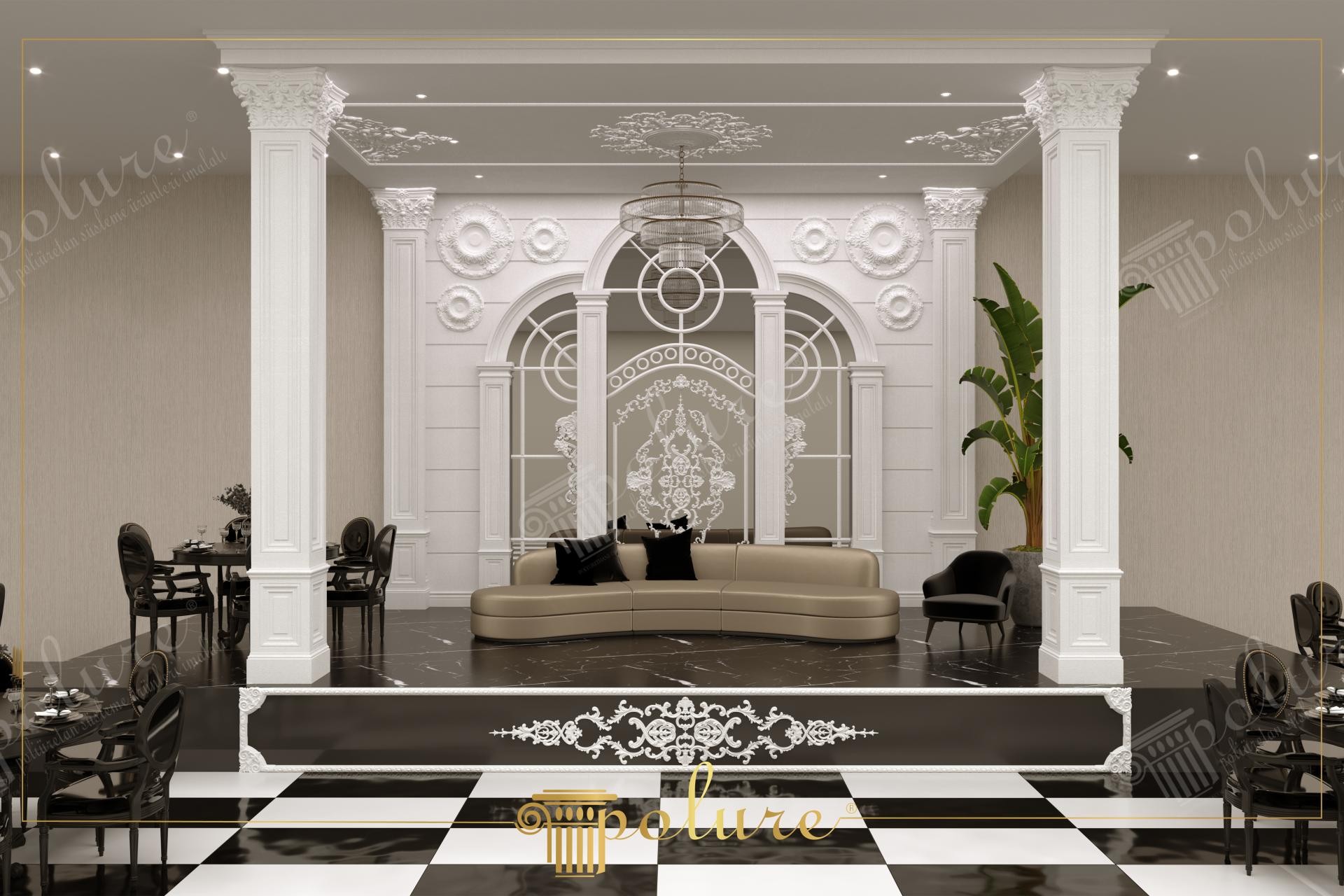
Classic Polyurethane Interior Design for Elegant Wedding Hall Decoration
Classic Inspiration in Wedding Hall InteriorsThe design of this wedding hall highlights the power of polyurethane elements in creating a majestic atmosphere. Ornamental details, geometric patterns, and richly decorated surfaces bring a sense of harmony that transforms the space into a setting perfect for special occasions.The combination of soaring columns with Corinthian-style capitals and layered wall moldings accentuates the grandeur of the stage. Decorative ceiling medallions and symmetrical rosettes enrich the vertical surfaces, calling back to neoclassical traditions. These artistic touches give the hall an authentic character while ensuring the focus rests on the central performance area.Geometric Harmony and Material SelectionThe striking black-and-white checkered floor introduces both rhythm and balance. On the stage, a large arched window-like frame with intricate floral and lattice motifs becomes a defining focal point. The choice of ornamental patterns combined with glossy marble-like textures creates an elegant interplay between tradition and modernity.Black-and-white checkerboard flooring enhances contrast and structure.Symmetrical arches incorporate detailed ornamental motifs.Polyurethane wall reliefs and medallions add depth and grace.Historically, such decorative forms can be traced back to Greek and Roman classical architecture, where symmetry and proportion played a central role. This hall captures that same heritage while customizing it for contemporary celebrations.Comfort with EleganceThe inclusion of a beige curvilinear sofa, paired with minimalist black chairs, provides seating that reinforces the theatrical quality of the setting. Together with strategic lighting and refined architectural detailing, the result is a hall that feels both timeless and inviting. The wedding hall design showcases refined polyurethane details that blend modern elegance with classical inspiration. Decorative columns frame the stage and emphasize balance throughout the setting. Ceiling medallions and ornate wall motifs highlight craftsmanship and sophistication. The black-and-white checkerboard floor introduces a vivid sense of geometry. A central arch structure with ornamental patterns defines the space with symbolic symmetry. A beige curvilinear sofa softens the angular environment with comfort and grace. Black seating elements surrounding the area add contrast and formality. Layered wall reliefs and rosettes enhance the sculptural quality of the surfaces. Subtle lighting ensures the decorations remain visually dominant without overwhelming. This hall draws on neoclassical traditions with a modern adaptation. The use of polyurethane ensures durability as well as elegance. Historical echoes are present in the architectural proportions. The design merges ornament and practicality in harmonious proportion. Every detail contributes to a sense of formality appropriate for weddings. This interior achieves a timeless atmosphere with ornate geometric features.
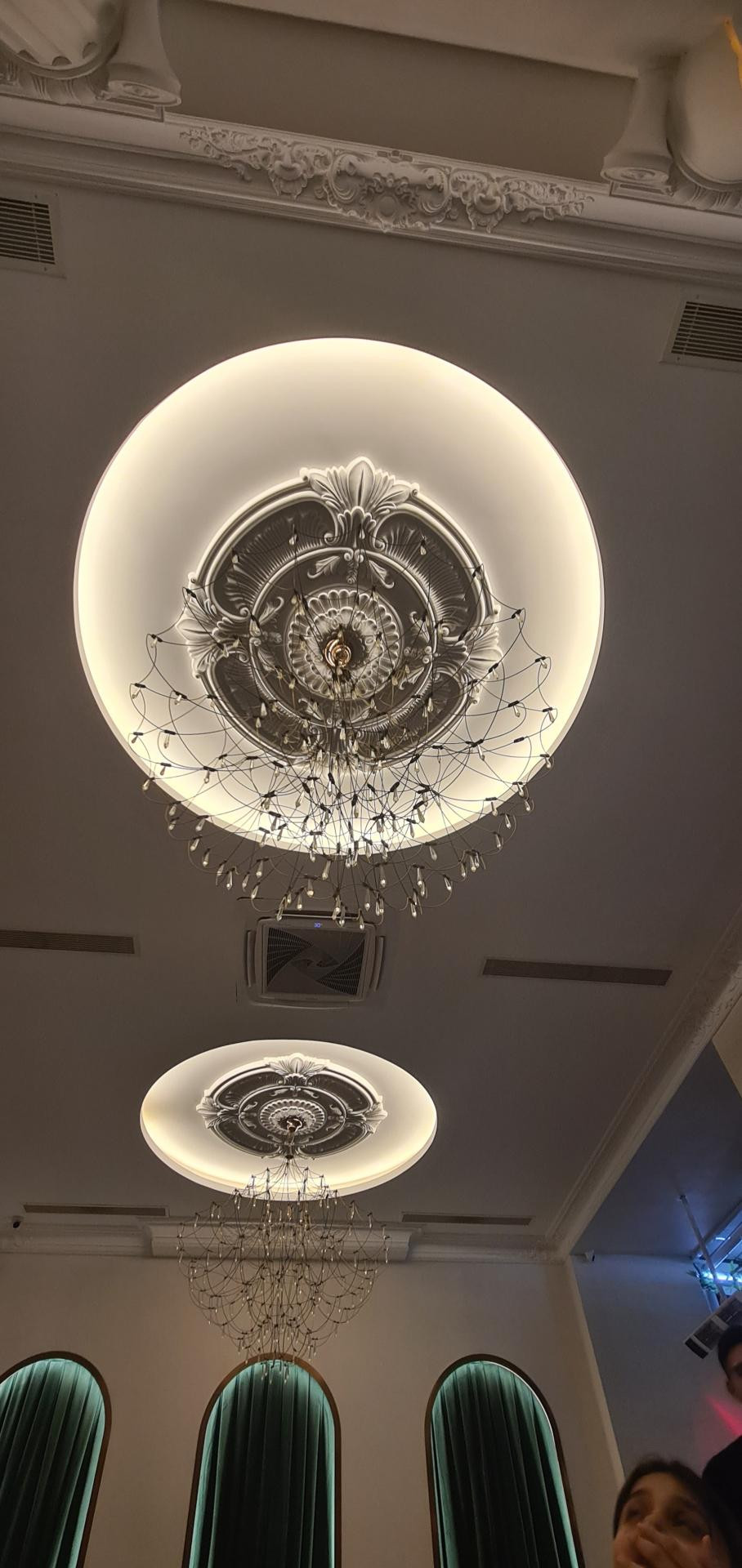
Elegant polyurethane ceiling medallions and chandeliers in classical interior design
Classical Elegance in Ceiling DesignThe interior decor showcases an impressive use of polyurethane ceiling medallions that combine functionality with artistry. These medallions feature floral motifs, layered ornamental reliefs, and symmetrical geometries that nod to neoclassical traditions. The polymer material allows for precise detailing while being lightweight and durable, making it a popular choice for modern reinterpretations of classic styles.At the center of each medallion hangs a grand crystal chandelier. The delicate branches of the chandelier, adorned with suspended elements, reflect and refract light, enhancing the room with soft brilliance. The circular lighting built around the medallions highlights their carved contours and accentuates their decorative curves, creating a focal point on the ceiling.Architectural Detailing and AmbianceThe space is further enhanced with ornate cornices and detailed molding, blending seamlessly into the ceiling medallions. This continuous flow of decoration emphasizes harmony throughout the interior. The deep green drapery on tall arched windows reinforces the classical interior character while adding dramatic contrast against the white ceiling.Historically, ceiling medallions gained popularity during the Renaissance and later flourished in Baroque and Rococo interiors as a way to frame chandeliers. The current design echoes that tradition while using modern polyurethane, allowing greater flexibility in installation and long-lasting durability. The combination of polyurethane medallions, crystal illumination, and architectural balance places this interior firmly in the lineage of timeless decorative approaches.Detailed floral ornaments in circular geometryCrystal chandelier integrationWarm perimeter lighting to outline formsUse of polyurethane for lightweight durability The ceiling design displays refined polyurethane medallions with intricate reliefs and floral symmetry. The integration of crystal chandeliers adds sparkle and a sense of grandeur. A circular ring of light highlights carved motifs with dramatic contrast. Decorative cornices complete the flow of ornamentation across the room. Tall arched windows frame deep green drapery as part of the ambiance. The material provides both flexibility and precision in carving. Such interiors reflect inspiration from neoclassical design traditions. Historically, medallions were central in palace and salon ceilings. The scheme here modernizes those traditions with durable materials. The chandeliers add rhythm to the ceiling layout. Their layered drops emphasize vertical elegance. Combined with lighting, the design achieves a glowing harmony. The classical interior atmosphere feels timeless and luxurious. Each detail contributes to refined proportion and dignity. Overall, the use of floral motifs, symmetry, and sculptural light creates a balanced and ceremonial space.
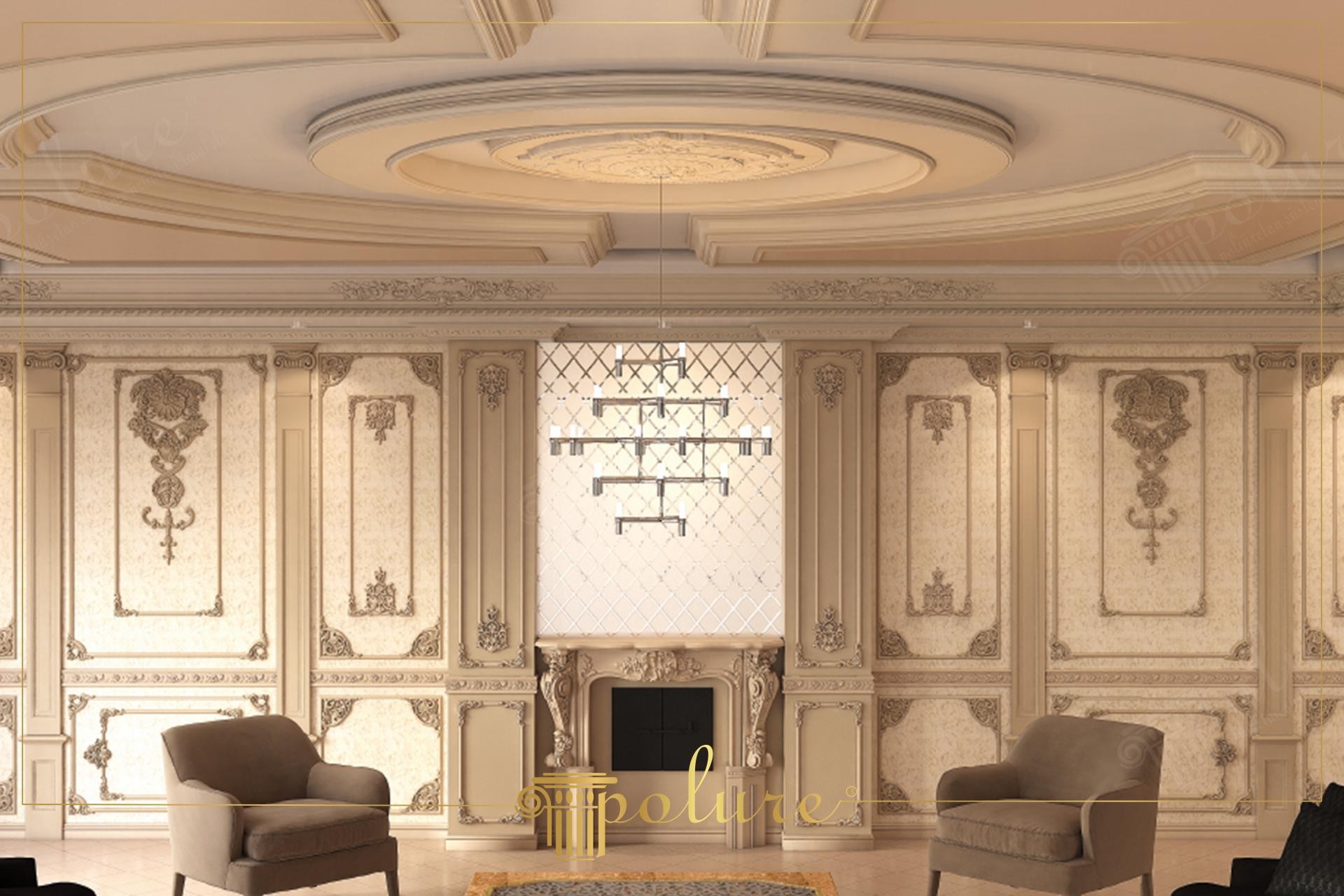
Timeless Aesthetic with Polyurethane Classical Interior Decoration
Polyurethane Classical Interior DesignPolyurethane is a versatile material that allows interior designers to craft refined and highly durable decorative details. In this classical living room, the polyurethane elements create an atmosphere of balance between timeless artistry and modern comfort. The design focuses on elegant patterns, calculated geometry, and ornamental flourishes that elevate the perception of the space.The ceiling features oval layers with a central medallion, integrated into the circular geometry with subtle depth and relief. This adds a strong classical character while emphasizing symmetry. The decorative panels on the walls are enriched with ornate motifs inspired by historical traditions, displaying floral carvings and arabesque details that highlight the beauty of balanced repetition. Such features can be traced back to Renaissance and Baroque interiors, where relief carvings and ornamental plasterwork were signs of sophistication.The fireplace acts as the focal point, framed by sculptural elements and complemented by a modern chandelier that provides contrast through linear, metallic geometry. The use of warm beige and cream tones enhances the tactile richness of the textures. Elegantly cushioned seating preserves a luxurious yet inviting impression, making the room suitable for both formal and relaxed gatherings.Among the distinct advantages of using polyurethane is its adaptability in replicating the fine details often found in wood and plaster, while offering long-lasting durability. This makes it an ideal choice for creating classical decorations that withstand the test of time without compromising visual appeal. Its lightweight quality also allows easier installation compared to traditional methods.Intricately carved wall panels with floral and arabesque patternsOval ceiling structure with layered depthDecorative medallion relief for timeless emphasisFireplace framed in sculptural ornamentationBalanced combination of classical design and modern lightingOverall, this use of polyurethane highlights the practical and aesthetic qualities of the material, ensuring that interior decoration remains both elegant and functional. This classical interior design shows how polyurethane delivers both timeless beauty and durability. The walls are adorned with ornamental motifs in arabesque and floral themes that enrich the symmetry of the room. Carved reliefs integrate with rectangular and oval panels for visual depth. A layered ceiling design with a central medallion emphasizes balance in classical geometry. The fireplace features finely sculpted details that act as a focal point. Beige and cream tones accentuate the soft luxury of the environment. Modern lighting in geometric form contrasts gracefully with traditional decor. Polyurethane enables precision that echoes historical craftsmanship. Decorative panels carry elaborate borders with recurring ornamental rhythm. The ceiling’s layered depth mirrors traditional plasterwork while remaining lightweight. The medallion integrates floral curves with subtle three-dimensional detailing. The chandelier’s linear geometry provides contemporary balance. Seating arrangements enhance comfort without overwhelming ornate backdrops. The overall setting achieves equilibrium between functionality and elegance. Polyurethane ensures the continuation of fine interior decoration traditions.

Hotel interior decoration ideas - How should hotel interior decoration be
Designing the interiors of hotels requires solutions that combine functionality, durability, and refined aesthetics. One effective approach is the use of polyurethane products that replicate the feel of wood while providing superior resistance against moisture and frequent use. This allows the creation of elegant details in lobbies, lounges, and guest rooms that withstand the demands of hospitality spaces.
An anecdote illustrates this well: When a hotel in a coastal region renewed its common areas, it replaced wooden moldings with polyurethane versions. Guests appreciated the timeless look, while management benefited from ease of cleaning and long-term performance.
These design elements fit perfectly into modern and classical concepts, whether used as decorative ceiling panels, ornate wall moldings, or sophisticated arch details. Such applications result in spaces that are both memorable and practical in daily use.
- Durability against moisture and wear
- Ease of installation and painting
- Elegant imitation of wood-like aesthetics
- Customizable forms for unique hotel identities
Architectural design integrations
For hotel projects, architectural and decorative elements must be designed in harmony both technically and visually. Polyurethane products meet these needs by enabling tailor-made solutions while respecting architectural constraints.
The advantages of adopting polyurethane in hotel architecture include its capacity to replicate detailed ornamentation and its resistance to environmental factors. Professional services can deliver a seamless integration.
- 2D and 3D archive
- 3D scanning
- 3D printer
- CNC
- High-pressure injection
- Paid exploration and surveying
- Subsequent paid 2D and 3D drawings
- Special production on request
- Polyurethane mold manufacturing
Practical decoration ideas
Hotel interiors achieve uniqueness through the right decoration approaches. One hotel redesigned its suites with ornamental ceilings and achieved a distinctive sense of luxury. Such details highlight the versatility of polyurethane solutions.
Ideas include using crown moldings, detailed ceiling rosettes, and wall frames that complement the furniture and curtains, creating a coherent and elegant environment.
Historical development
The evolution of hotel interior decoration reflects the cultural and technological changes in architecture. In the 19th century, wood and plaster were commonly used, but with time, new materials improved practicality. An anecdote from a heritage mansion turned hotel shows how replacing old plaster ornaments with polyurethane replicas preserved the authenticity without compromising durability.
This transformation enabled hotels to maintain a historical charm with modern comfort and resilience.
Areas of application
Polyurethane stands out for its broad application areas in hotel interiors. From corridors to ballrooms, it ensures both aesthetics and functionality. This material is suitable for multiple structures including hotels, villas, mansions, palaces, and wedding halls.
- Decorative ceiling applications
- Wall and column claddings
- Ornamental arches and panels
- Furniture accessories and trim
Its versatility allows use in both interior and exterior spaces.
Main features
Polyurethane decorative products provide a reliable and aesthetic solution for hotels. Their main features include:
- Lightweight yet durable construction
- Hardness similar to wood
- Paintable and easy to maintain
- Moisture and water resistance
- Long-lasting performance in high-traffic areas
- Compatibility with classical and modern concepts
The lightweight structure reduces installation time and ensures flexibility for designers.
Comparisons with alternative materials
When compared to other decorative materials, polyurethane offers several advantages. Unlike plaster, it is lighter and less prone to cracking. EPS foam provides lower cost but lacks the durability and elegance of polyurethane. Duropolymer is closer in strength but with limited shape flexibility. Precast concrete ensures robustness for exteriors but is heavy and harder to install. Fiber polyester grants flexibility but may fall short on fine detailing.
Comparison of prices
From a price-performance perspective, polyurethane provides long-term savings due to its durability and low maintenance. While alternatives may have a lower entry cost, polyurethane proves to be more competitive in total lifecycle value. Its cost-effectiveness lies in balancing luxurious aesthetics with practical endurance.
Hotel interior decoration ideas - How should hotel interior decoration be is a central question for creating stylish, durable, and unique spaces. By using polyurethane solutions, hoteliers achieve interiors that reflect elegance while standing up to the demands of daily operations. These materials provide resilience against humidity and wear, making them suitable for intensive hospitality use. They replicate wood-like aesthetics without the downsides of weight and fragility. Applications extend from lobbies and suites to banquet halls, where decorative ceilings, wall panels, and moldings enhance atmosphere. Modern technologies like CNC and 3D printing add flexibility in creating custom ornaments. Compared to plaster or EPS foam, polyurethane offers more balance in terms of durability and precision. Maintenance requirements are minimal, ensuring sustainable long-term use. With both classical and contemporary styles supported, architects and designers consistently rely on polyurethane for hotel interiors. This ensures not only aesthetic impact but also operational efficiency and extended material life.
Hotel interior decoration ideas - How should hotel interior decoration be
Hotel interior decoration ideas - How should hotel interior decoration be is a guiding theme for creating sophisticated and durable interiors. Using polyurethane products in hotels allows designers to achieve details that are both aesthetic and highly resistant to humidity and wear. As an alternative to wood, polyurethane offers lightweight yet durable elements that can be painted or shaped to fit various interior concepts. It enhances hotel lobbies, suites, banquet halls, and corridors with details that reflect both elegance and functionality. Polyurethane products can be used for ceilings, moldings, wall panels, and decorative coverings, helping to create a luxurious atmosphere without sacrificing practicality. These materials are suitable for intensive use spaces such as hotels because they combine strength, elegance, and flexibility. With modern production technologies like CNC cutting, high-pressure injection, and custom molds, it is possible to create project-specific solutions that elevate the identity of hotels. Interior decoration in hotels is not only about visual impact but also about endurance and easy maintenance, which are effectively achieved through polyurethane applications.
hotel interior decoration ideas - how should hotel interior decoration be, hotel interior design, polyurethane decoration, ceiling molding hotel, hotel decoration ideas, decorative wall panels, hotel lobby design, luxury hotel interiors, architectural polyurethane, interior ornamentation, banquet hall design, ceiling rosette, hotel renovation solutions, modern hotel decor, classical hotel decoration
Information Gallery
List of detailed descriptions of images in the image gallery.
